
Every hardware team asks one question first: what will PCB design cost? The answer is not a single number. PCB design cost shifts with the board, the parts, and the speed. In this guide, you will meet the seven factors that move the price.
No two boards cost the same to design. A small sensor board takes far less work than a dense board with fast signals. A rush job costs more in time and care than a slow one. So learn the factors first, and you will read any quote with clear eyes.
This guide lists seven factors in plain words. You will see what pushes PCB design cost up and what keeps it down. You will also learn how to cut cost with no loss in quality. By the end, you will know how to plan your budget with sense.
What drives PCB design cost?
Seven factors drive PCB design cost. Board size and layers set the base work. Part count and density add hours. Circuit type sets the skill the job needs. Speed, revisions, files, and tests add the rest. The sections below walk through each one.
No factor works alone. A big board with few parts may still need much work if the circuit is fast. A small board with dense parts may need more hours than a big, simple one. So weigh all seven factors as one picture, not as seven lone items.
| Factor | What changes | Cost effect |
|---|---|---|
| Board size and layers | Bigger board, more layers | Higher |
| Part count | More parts to place | Higher |
| Circuit type | Fast signals or RF | Higher |
| Speed | Rush deadline | Higher |
| Revisions | Late changes | Higher |
| Files and tests | Docs and test plans | Higher |
Factor 1 and 2: board size, layers, part count, and density
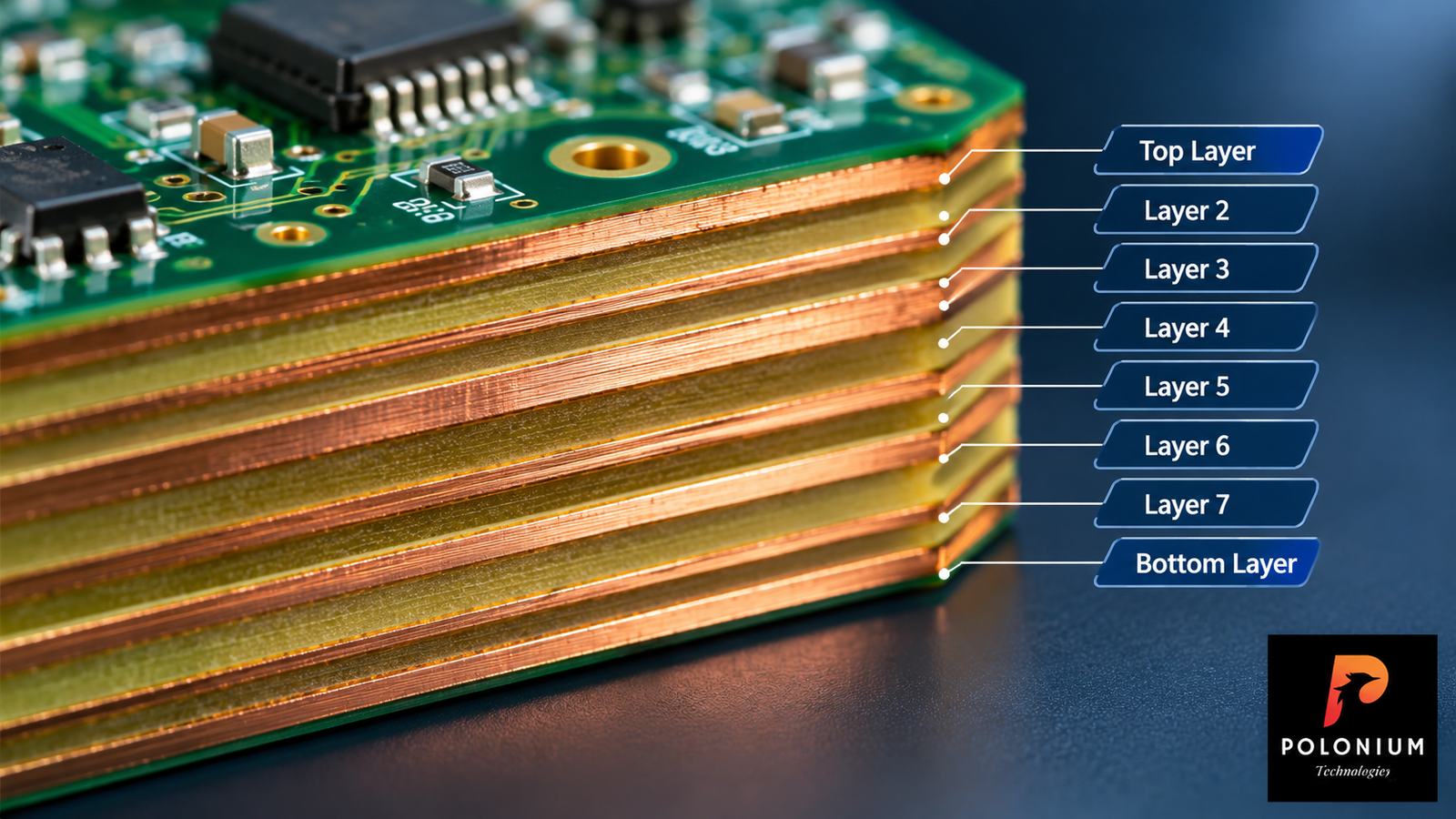
Board size sets the work in a direct way. A bigger board holds more parts and more tracks. More layers add more routes, and each layer adds checks. A two-layer board is quick to route. A six-layer board takes far more care and time.
Part count adds work in the same way. Each part needs a spot, a footprint, and tracks to its nets. Dense boards pack parts close, and the routing turns tight. Tight routing needs more time and more review. So count the parts early, and you will sense the work ahead.
A simple board with few parts is quick to design. The engineer places the parts, routes the tracks, and runs the checks. The work stays light, and the review stays short. So a small board often means a small design effort.
Factor 3 and 4: circuit type and speed
The circuit type sets the skill the job needs. A simple digital board is quick to design. A board with fast signals, radio links, or high power needs more care. The designer must plan track lengths, shields, and heat paths. That care adds hours, and it adds review time too.
Speed is the next big factor. A rush job needs more hands and longer days. The team may work nights to hit your date. That pace adds cost, and it can add faults too. So give the team time when you can, and your cost stays in check.
Factor 5, 6, and 7: revisions, files, and tests
Late changes push PCB design cost up fast. Each revision means new checks and new files. A change late in the job can force a fresh layout pass. So freeze the spec early, and changes stay small. A clear spec is the best cost saver you have.
Files and tests round out the seven factors. The team writes docs, test plans, and a bill of materials. A prototype run proves the design before you scale. Tests catch faults while they are cheap to fix. In short, good files and tests cut risk, and they cut long-run cost too.
How to keep PCB design cost down
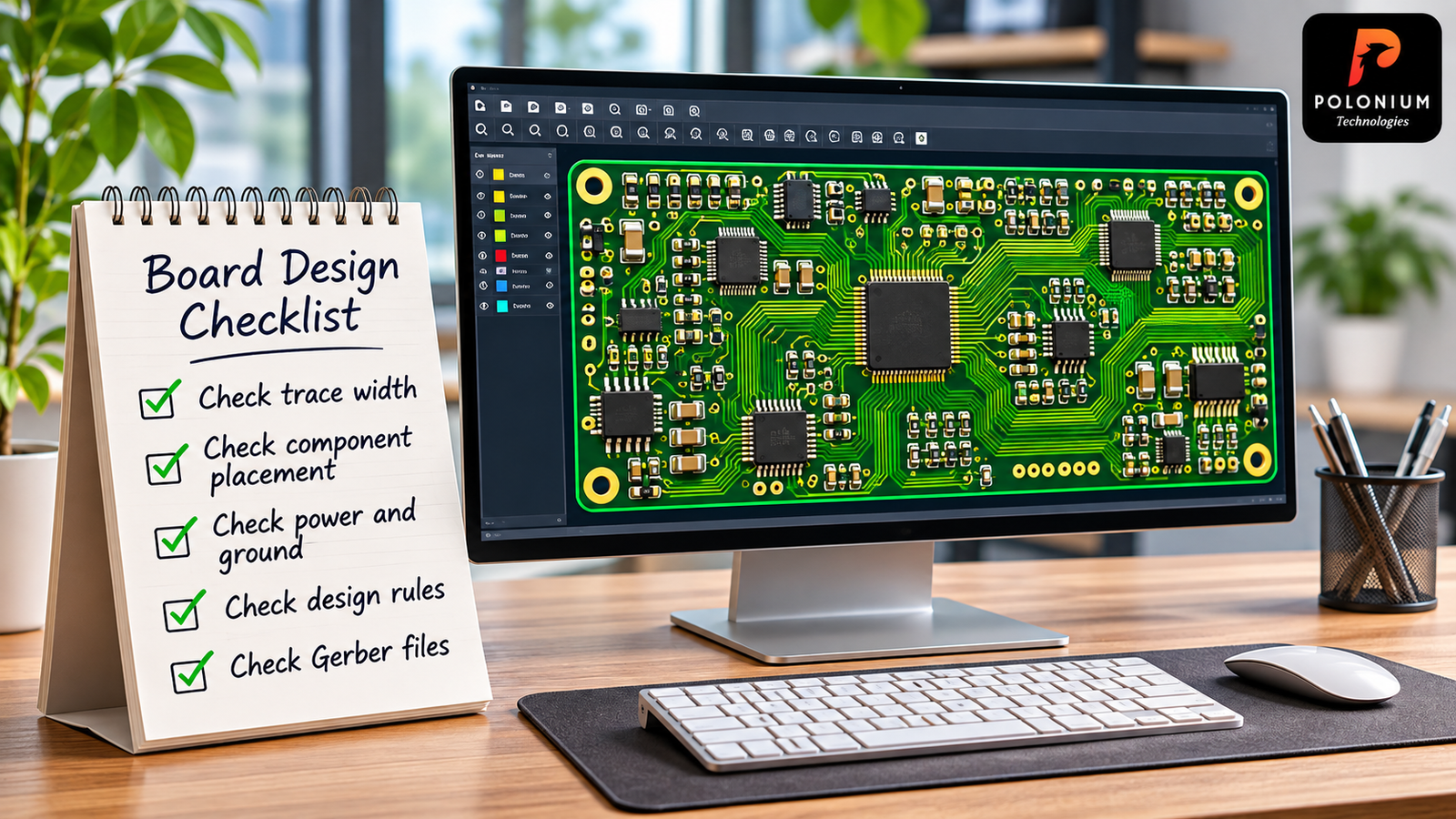
You can cut PCB design cost with no loss in quality. First, freeze the spec before the work starts. Next, pick the lowest layer count that fits the circuit. Then keep the part count low, and use parts the team knows well. These three steps cut hours from the job.
A design review also saves money. A second pair of eyes spots tight tracks and weak power paths. The review also checks the part footprints and the board edge. So run a review before you send the files out. A one-hour review can save a full rebuild.
Get a clear proposal for your board
The fastest way to learn your PCB design cost is a clear proposal. Share your idea, your schematic, or your old board. The team reads your files and lists the work in plain words. Then you get a proposal with the scope, the time, and the steps. No guesswork, and no hidden items.
Polonium Technologies sends each proposal within 48 hours. The team has served 250+ clients since 2019. Share your project, and the team will guide you from idea to tested board. Start with a short note about your board and your goal.
Common questions about PCB design cost
Q: Why do two quotes for PCB design differ so much?
A: Each team weighs the seven factors in its own way. Board size, part count, and speed all shift the work. So ask what each quote covers before you pick one.
Q: Can I cut PCB design cost with no loss in quality?
A: Yes. Freeze the spec early, pick fewer layers, and keep the part count low. A review also stops faults while they are cheap to fix.
Q: How fast can I get a proposal?
A: Polonium Technologies sends each proposal within 48 hours. Share your idea or your files, and the team will list the work in plain words.
PCB design cost is not a mystery. It follows the board size, the parts, the circuit, and the speed. Plan the spec well, and the cost stays in check. Polonium Technologies can turn your idea into a board you can test. Need the board assembled too? We get PCBA done from China. Visit the Services page (https://poloniumtechnologies.com/services/) to start, or send an inquiry through the Contact page (https://poloniumtechnologies.com/contact/).